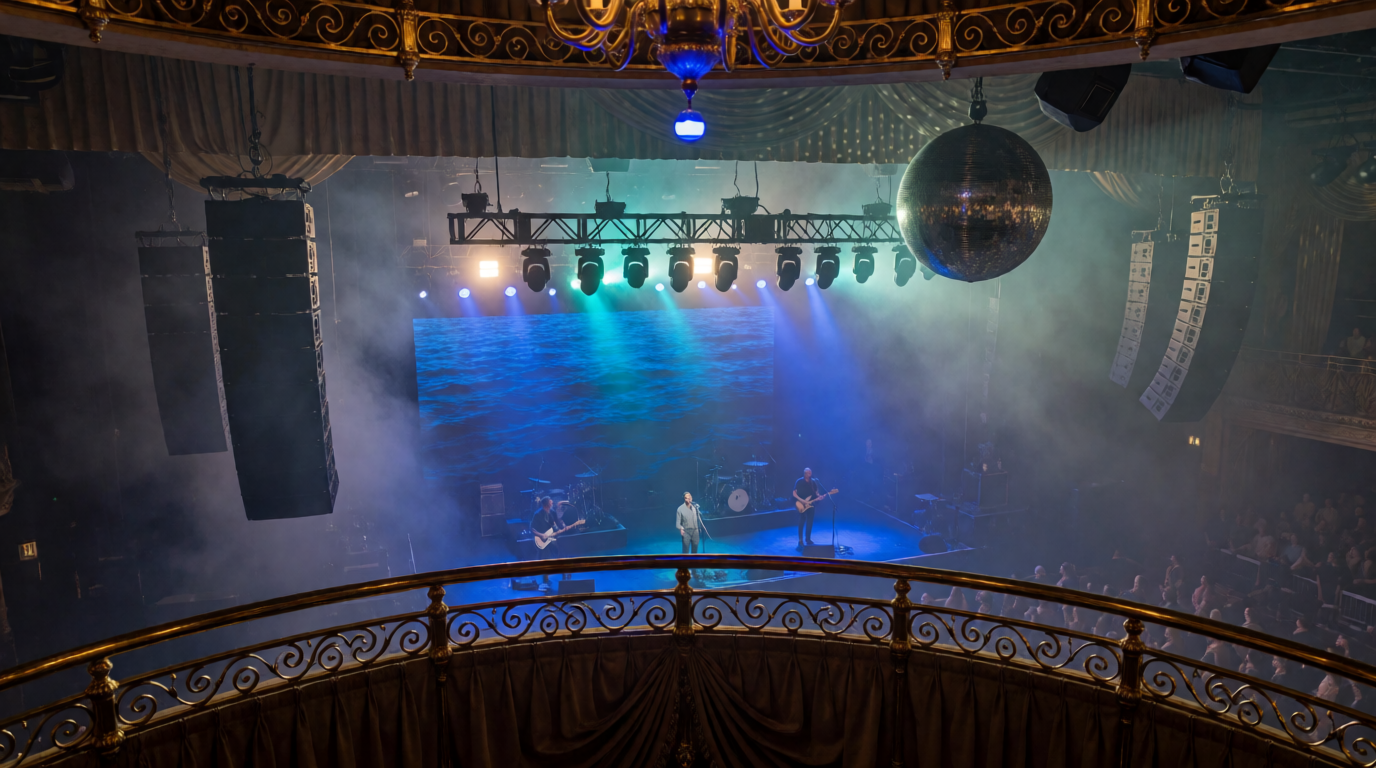
Truss is humble. It hangs in the dark above the stage, carrying fixtures, speakers, and screens, and nobody applauds it. But somewhere in a composite shop story, a length of aluminum began to dream. It imagined glass beads, curved arms, and a place of honor above a ballroom. It dreamed of becoming a chandelier. The dream was not foolish. Decorative truss, circular truss, and architectural lighting structures are a growing part of production design, and the engineering behind them is as demanding as any arena rig. When truss gets ambitious, the production needs design, engineering, and taste.
A Skeleton With Ambitions
Truss emerged as a utilitarian skeleton for lighting and sound in the 1970s and 1980s, built by companies such as Milos, Tomcat, Thomas Truss, and Global Truss. Over time, designers began to treat it as scenery. Circular truss, arches, towers, and sculptural shapes appeared in concerts, fashion shows, and corporate events. Cirque-style productions and Las Vegas residencies blurred the line between structure and decor, and aluminum became an aesthetic material.
Why Clients Love Decorative Truss
Decorative truss delivers visual weight at a modest cost. A ring of truss with LED fixtures can create a chandelier effect that fills a ballroom, while lighting and video can turn it into a moving centerpiece. It also provides functional benefits: rigging points, fixture positions, and cable routes in a single object.
For clients, a truss chandelier may offer big impact with fewer custom fabrications. For production companies, it leverages existing inventory, and creative differentiation supports higher margins.
Start With a Concept and a Structure
Begin with a concept sketch: shape, scale, and materials. Is it a circle, spiral, tiered ring, or geometric cluster? How will it hang? What will it carry? Then involve a structural engineer or truss manufacturer early.
Build a 3D model in Vectorworks, and analyze with Braceworks or manufacturer tools. Verify loads, span, bridle angles, and hardware. A beautiful chandelier that cannot be rigged safely is not a design.
Choose the Right Truss System
Decorative truss options include circular truss sections from Tomcat and Milos, ladder truss, box truss, triangular truss, and custom-fabricated shapes. Choose truss with the appropriate load rating, profile, and finish. Many suppliers offer black, silver, and powder-coated finishes.
For lightweight designs, consider small-format truss or aluminum tube structures. For large designs, use heavier systems with engineering support. Always use certified components, and avoid mixing brands unless approved.
Hide the Hardware, Respect the Load
Aesthetic goals often conflict with rigging realities. Designers want hidden hardware, while riggers require visible, inspectable connections. Reach compromises: use discreet bridles, black slings, and color-matched hardware, while keeping load paths accessible for inspection.
Add secondary suspension for overhead use, as required by safety standards. Verify weights carefully, including fixtures, cables, decor, and LED panels. Never hide safety to improve appearance.
Integrate Lighting and Effects
A truss chandelier becomes magical when lighting is integrated. Mount LED fixtures, pixel tubes, and small moving lights along the structure. Astera Titan Tubes, Chauvet COLORband, and Elation SixBar units create linear effects. Pixel mapping with MADRIX or console tools turns the structure into a dynamic sculpture.
Plan cable routing, power, and data. Use wireless DMX or battery-powered fixtures to reduce cables. Hide cables inside truss chords or behind decor. Careful integration produces a clean look that behaves like a single object.
Dress the Structure
Decorative elements add personality: fabric wraps, crystal strands, foliage, acrylic panels, LED mesh, or custom cladding. Ensure everything is flame retardant, certified to standards such as NFPA 701 where required. Keep weights low, and avoid loose elements that could fall.
Test dressing under lighting, since materials react differently to color and angle. Consider maintenance: how will elements be cleaned or replaced? A dressed truss should survive transport and repeat use.
Plan Installation and Safety
Chandeliers hang over people, so safety is paramount. Follow rigging standards, inspection procedures, and exclusion zones. Use motors with load monitoring, redundant suspension, and trained riggers. Provide spotters and clear communication.
Coordinate with venues about rigging points, access, and approvals. Many ballrooms restrict hanging loads or require engineering letters. Prepare documentation early.
Make It Travel and Last
If the design is for touring or repeat events, plan modularity: sections that disassemble, cases that protect, labels that guide. Use quick-release connections, and numbered parts. Create assembly instructions with photos.
Choose finishes that resist scratches. Keep spares. A chandelier that arrives damaged looks cheap, and a repeatable design earns revenue across multiple events.
Communicate the Dream Honestly
Designers and clients may dream bigger than the structure allows. Explain limits with numbers: weights, spans, rigging capacity. Offer alternatives: smaller diameter, lighter dressing, additional points, ground support. Honesty prevents disappointment and risk.
Present renders and mockups early, and adjust. Many clients appreciate being part of the engineering conversation, and the result is better design.
The Business Insight
Decorative truss is a creative upsell. A production company can offer signature structures that elevate events, with design, fabrication, rigging, and lighting bundled. Price for engineering, materials, labor, and risk. Create a catalog of repeatable designs, such as ring chandeliers and tiered arches, to reduce custom work.
Track margins and reuse. A well-designed chandelier can pay for itself across dozens of events.
Practical Takeaways
Start with concept and engineering, choose the right truss, and respect loads. Integrate lighting, dress with flame-retardant materials, plan safe installation, design for travel, communicate limits, and package signature structures.
The Bottom Line
Truss that dreams of becoming a chandelier can succeed when imagination is supported by engineering. With careful design, safe rigging, and thoughtful lighting, aluminum becomes architecture. The audience sees a glittering centerpiece, and the crew knows the strong skeleton hidden inside the glow.
