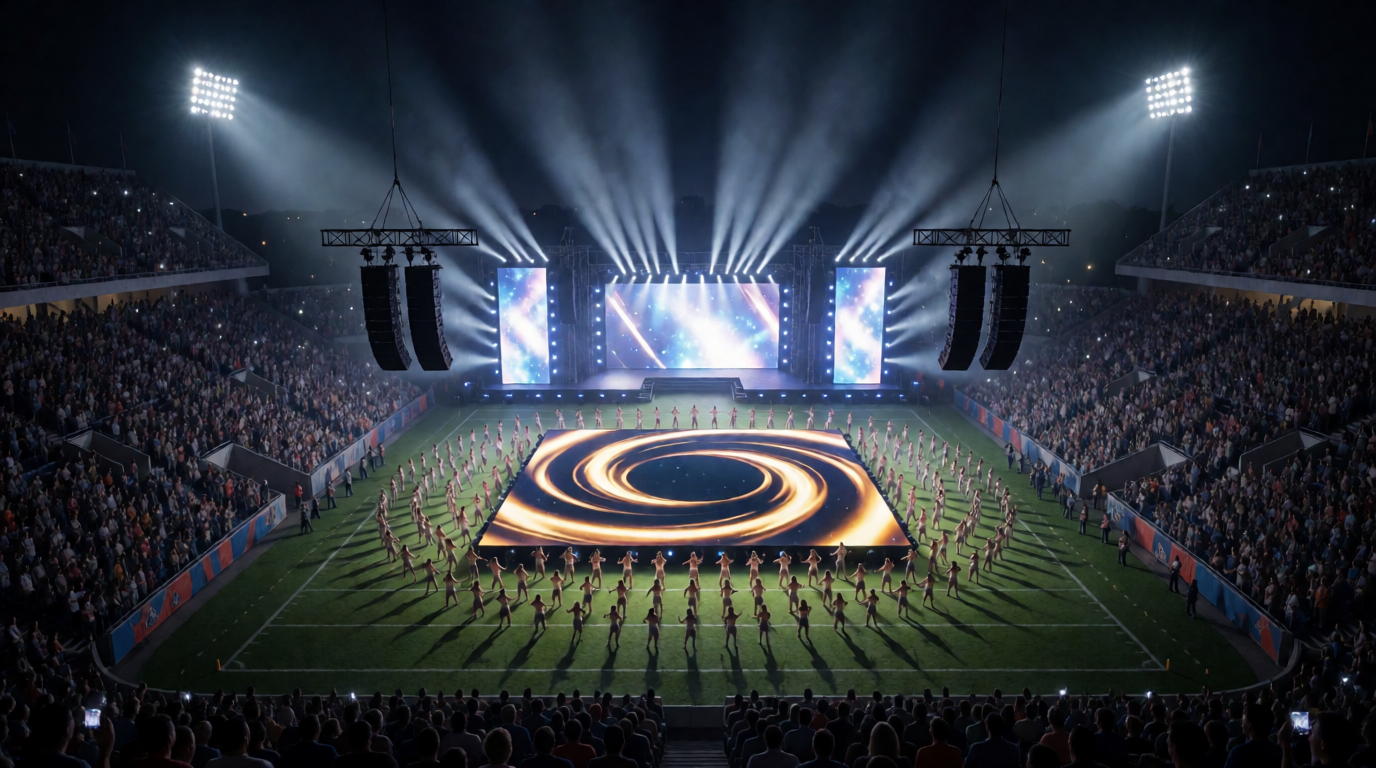
The delay towers were perfect in the afternoon. Aligned, measured, tuned, they delivered clean sound to the back of the field during soundcheck, and the system tech went to dinner satisfied. By the time the gates opened, in this composite tale, the towers had developed stage fright. The sound was thin, the timing seemed off, the coverage felt different, and the engineer wondered whether the equipment had lost its nerve. It had not. The audience, the temperature, the wind, and the crowd had changed the room. The towers were fine, and the tuning was stale. PA towers that develop stage fright are a lesson in tuning for the world that actually arrives.
The Field Changes When People Arrive
An empty field and a full field are different acoustic environments. Bodies absorb sound, especially at high frequencies. Crowd noise raises the noise floor. Temperature shifts as the sun sets, changing the speed of sound. Wind scatters energy, and humidity alters high-frequency absorption. A system that sounded perfect at four in the afternoon can feel entirely different at nine at night.
This is physics, not betrayal. Sound travels at roughly 343 meters per second at 20 degrees Celsius, changing by about 0.6 meters per second per degree. Over distance, even small shifts affect delay alignment.
A Lineage of Towers
Delay towers have been part of outdoor sound since the early festival era. At Woodstock in 1969, Bill Hanley used distributed speaker towers to carry sound across a large hillside. Over decades, line arrays from L-Acoustics, d&b audiotechnik, Meyer Sound, and Martin Audio have refined the method, supported by measurement tools such as Rational Acoustics Smaart. The lesson of history is that coverage is a living thing.
Tune Twice: Empty and Full
Plan two tuning sessions: one with the empty field, and one after the audience arrives. During the second, measure again with Smaart at representative positions, compare with earlier data, and apply minor adjustments. Focus on high-frequency EQ, level, and delay.
Use a stand-in engineer or assistant to walk the field with a measurement mic while the system tech adjusts from FOH. A thirty-minute check after doors can restore clarity.
Account for Temperature and Humidity
Environmental changes matter. Use temperature-aware tools: Smaart and prediction software such as L-Acoustics Soundvision and d&b ArrayCalc allow temperature and humidity inputs. Monitor with weather stations from Kestrel or Davis Instruments, and adjust delay accordingly.
At sunset, temperature gradients can bend sound, sometimes making it carry farther or fade unexpectedly. Plan for a late-evening check, and communicate changes to FOH.
Re-Measure Delays and Phase
Delay settings drift. After the audience arrives, verify delay times between main system and towers, using impulse response or delay finder tools. Confirm polarity and phase, especially for subwoofers and overlap zones.
Maintain headroom by avoiding excessive correction. Small changes of one to three milliseconds often suffice. A well-aligned tower restores localization to the stage.
Beware of Wind and Weather
Wind shifts coverage dramatically. Crosswinds can push high frequencies off target, causing uneven coverage across the field. Downwind areas may sound louder, upwind areas thinner. Consider additional fills or adjusted aim when wind is strong.
For safety, monitor wind speeds at tower height, and follow wind action plans. A tower that is swaying is not only mis-tuned, it is dangerous. Include anemometers at FOH and tower positions.
Keep the Tower Alive Electrically
Sometimes “stage fright” is electrical. Amplifier channels may thermal limit in sunlit racks. Cables may degrade from moisture. Network links to towers may experience dropouts. Check amplifier meters, temperature, network status, and cable integrity after the audience arrives.
Provide shade and ventilation for amp racks, and UPS protection where possible. Monitor tower status remotely with Lake Controller, Galileo Compass, or d&b R1. A healthy tower behaves consistently.
Fix the Human Side of Stage Fright
Engineers may also develop stage fright. When towers seem to misbehave, panic can lead to over-correction: big EQ changes, level boosts, random delays. Encourage calm, methodical troubleshooting. Follow a checklist: check power, signal, delay, EQ, coverage, measurement.
Assign roles: system tech measures, FOH engineer listens, stage manager communicates. Use intercom to coordinate. A calm team makes better decisions.
Communicate With Artists and Management
Tell the artist and FOH what is happening: “We’re adjusting towers for crowd absorption, five minutes.” Transparency prevents rumors and frustration. Provide updates after changes.
For clients, share measurement graphs and explanations. Evidence turns a mysterious problem into a managed adjustment.
Document and Learn
Record before and after measurements, conditions, and adjustments. Create a tower log: time, temperature, wind, crowd density, EQ changes, delay changes. After the event, debrief: what changed, what worked?
Use data for future events. Over time, you will learn typical shifts for venues and seasons, and start pre-compensating. Knowledge reduces stage fright.
The Business Insight
Clients rarely understand audience acoustics, but they hear results. A company that retunes after doors and documents improvements can differentiate itself. Offer system tuning packages with multiple measurement sessions.
Price tuning time honestly, and explain the value: better sound, fewer complaints, happier artists. Tuning is not a one-time event, it is a service across the day.
Practical Takeaways
Expect the field to change, tune empty and full, and account for temperature and humidity. Re-measure delay and phase, watch wind, check electrical health, keep the team calm, communicate, document, and sell ongoing tuning.
The Bottom Line
PA towers develop stage fright when tuning ends before the audience begins. With a second measurement, thoughtful adjustment, and calm leadership, towers regain their confidence. The audience hears a clear, coherent system, and the engineer enjoys a second dinner.
