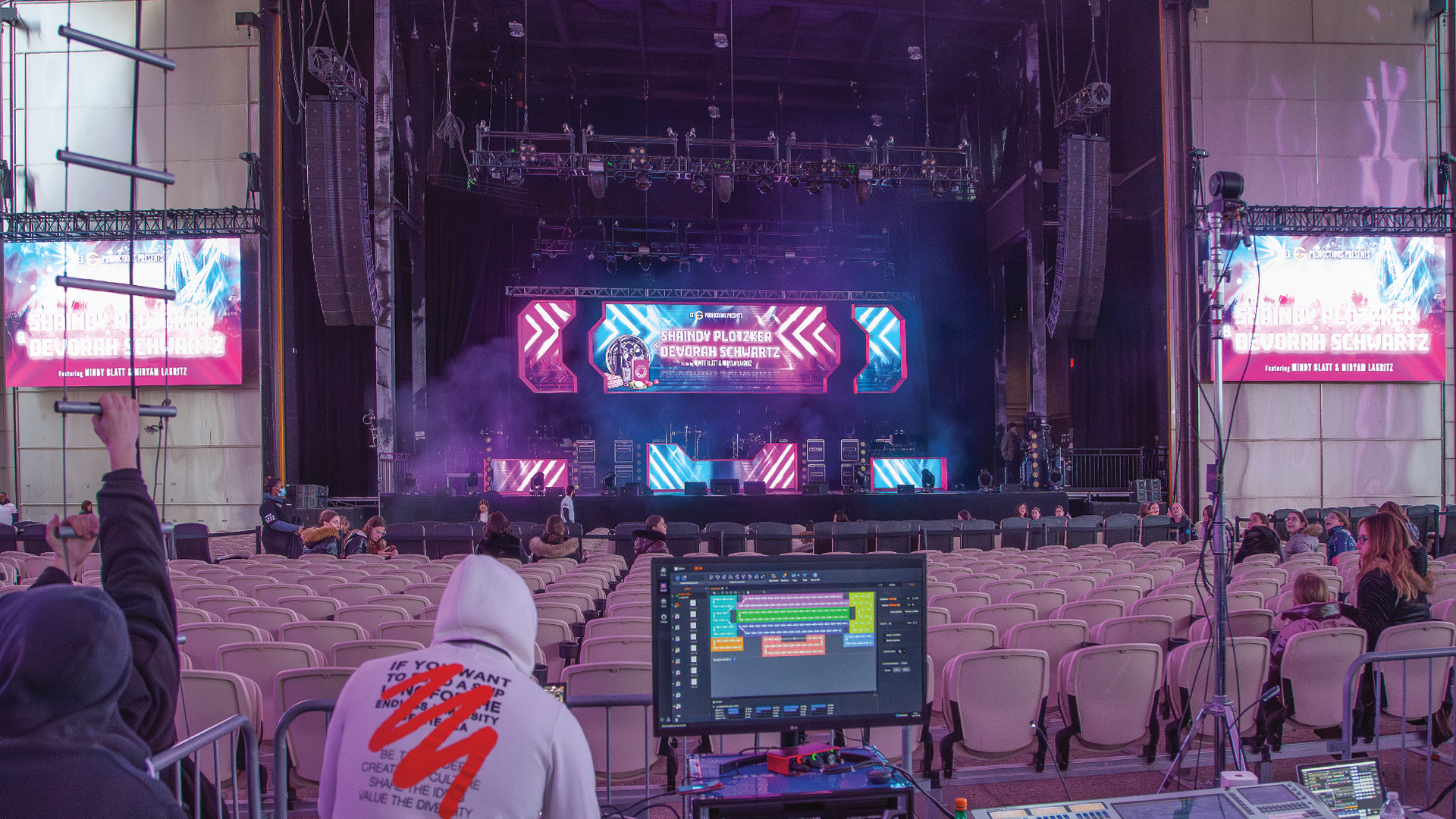
The visual signature of an amateur lighting rig on a wide stage is immediately readable to anyone who has spent time in professional production: hot spots at the center where multiple fixtures overlap, fall-off at the wings where coverage thins, and a persistent sense that the lighting is fighting the architecture rather than working with it. Achieving even stage wash across a wide platform — 40 feet, 60 feet, 80 feet, or more in large theatrical and concert applications — is a discipline that combines photometric calculation, fixture selection, trim height optimization, and programming technique into a coherent system that the audience experiences as simply ‘good light.’
The Photometric Foundation: Angle and Throw
Even wash begins with mathematics, not with art. Every lighting fixture has a beam angle — typically specified as the angle at which intensity falls to 50% of the peak — and a field angle where intensity falls to 10%. These angles, combined with the trim height of the fixture (the distance from the fixture to the lit surface), determine the diameter of the coverage circle on stage. Two coverage circles that overlap by approximately 50% of their diameter — the standard overlap specification for even wash — produce a transition zone where the combined intensity from both fixtures matches the peak intensity of a single fixture, resulting in even coverage across the overlap area.
Calculating these overlaps precisely before the rig goes up — using tools like WYSIWYG, Vectorworks Spotlight, or the ARRI Photometric Data software — reveals immediately whether the proposed fixture count and position plan will deliver even coverage, or whether there are gaps. ETC Source Four Lustr3 fixtures, ARRI SkyPanel S60 units, and Elation Proteus Rayzor 760 wash movers each have published photometric data that makes this calculation straightforward. The production that arrives at a venue having never run these numbers is discovering the adequacy of their specification by eye, on the show floor, under time pressure.
Fixture Selection for Wide-Stage Applications
Wide-stage wash demands fixtures with large-area, uniform output — not theatrical spotlights whose pools are designed to be distinct and focused. For front-of-house wash on wide stages, LED fresnels and LED Pars with wide beam spreads in the 40-60 degree range provide the most efficient coverage per fixture. The ETC ColorSource PAR and Chauvet Professional COLORdash Par H12 are workhorses at this application. At the premium tier, the ARRI SkyPanel S120-C — the largest fixture in ARRI’s LED soft-light range — provides extraordinary output uniformity over an enormous coverage area, making it the first choice for wide-stage wash in critical broadcast and film production environments.
For top wash delivered from overhead truss positions directly above the stage, moving wash fixtures with zoom capability — the Robe FORTE, Martin MAC Ultra Wash, Claypaky Xtylos — allow the programmer to adjust beam spread remotely, compensating for coverage gaps without requiring a rigger to refocus fixed fixtures at trim height. This flexibility is particularly valuable in multi-use venues where the stage width changes between productions.
Programming Techniques for Even Intensity
Even wash on a wide stage is not just a fixture placement problem — it’s a programming problem that requires careful management of intensity levels across the wash group. Fixtures at the edges of a wide stage, covering the wings where ambient light from the wings or stage sides may be lower, often need to run at slightly higher intensity than center fixtures to achieve perceptual evenness. This counter-intuitive programming — brightening the edges rather than dimming the center — is a technique that experienced lighting programmers call compensation programming, and it’s the reason why a well-programmed wash looks better than a flat 100% across the board.
Color temperature consistency across a wide wash requires similar attention. LED fixtures from different batches or manufacturers may have slight color temperature variations even when set to the same value. In a wide wash where fixtures from wing to wing are all ostensibly set to 5600K daylight, visible variation across the stage will be apparent to cameras and critical observers. The discipline of color matching — using a Sekonic C-800 or Klein K-10A spectrophotometer to verify consistent output across all fixtures before programming — eliminates this problem before it becomes visible.
Side Lighting and Its Role in Wide-Stage Coverage
For stages wider than approximately 50 feet, overhead wash alone often cannot achieve the depth of coverage that makes performers and presenters read clearly at the extreme wings without creating unacceptable fall-off at the wings or hot spots at center. Side lighting systems — fixtures positioned on boom arms in the wings, or on vertical truss towers at the stage edges — supplement the overhead wash with cross-light that fills the wings independently of the overhead system’s coverage limits. Martin MAC Viper Wash DX units on wing booms, or Robe Robin 600E Wash units on vertical truss, provide the range and flexibility to cover extreme stage widths.
The interaction between overhead and side lighting systems requires careful intensity balancing to avoid double shadows — the lighting artifact that occurs when two sources at different angles both illuminate a subject, creating two visible shadow lines. The ratio between overhead and side systems is a creative decision, not just a technical one, and it should be made by the lighting designer in consultation with the director of photography or the camera team if the event is being captured.
Testing Even Wash Objectively
The professional standard for commissioning a wide-stage wash system is objective measurement, not subjective evaluation. A lux meter taken to every relevant stage position — downstage center, downstage left, downstage right, upstage center, and both extreme wings — at show trim height provides a coverage map that reveals hot spots and fall-off areas with numerical precision. A 20% variation in lux levels across the measurement grid is the professional tolerance for even wash in most production environments. Larger variations are addressable with intensity compensation in the console; unexpectedly large variations may indicate fixture position problems that require physical adjustment. Do this test before rehearsals, not after.
