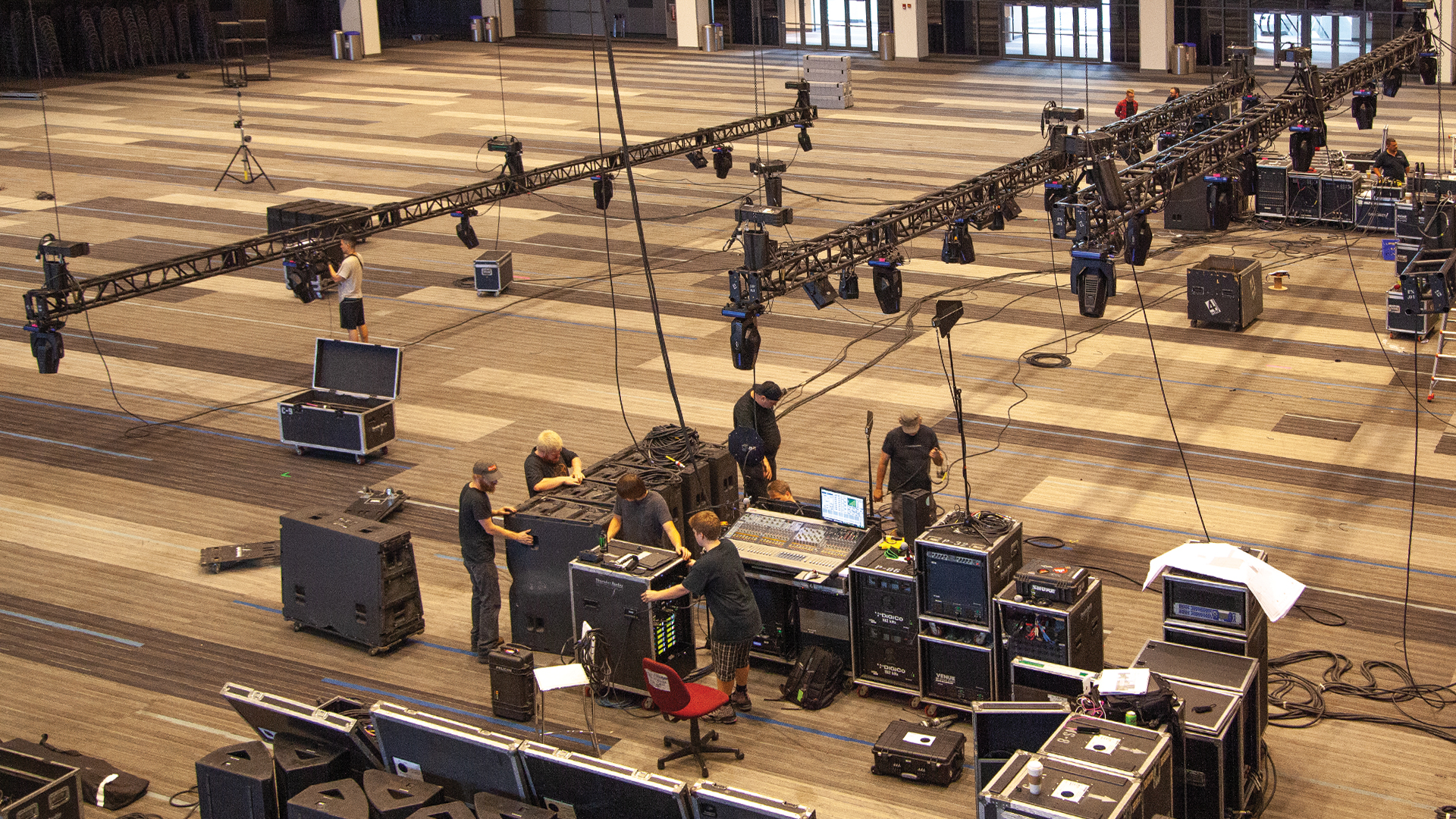
There’s a particular terror reserved for moments when overhead rigging decides it has somewhere else to be. Truss systems designed for static installation occasionally interpret their role more freely, developing movement that ranges from subtle drift to dramatic displacement. These escape attempts have interrupted performances, injured crew members, and generated legal consequences that extend far beyond the theatrical moment. The rigging industry has developed extensive protocols specifically because truss sometimes refuses to stay where it belongs.
The Mechanics of Unplanned Movement
Truss movement during operation typically originates from one of several failure categories: connection failure, motor or brake failure, anchor point failure, or external force application. Each category produces distinct movement patterns and requires different prevention strategies. The head rigger who can identify early signs of each failure type possesses skills that literally save lives.
Connection failures at truss junction points typically begin as small movements that operators might dismiss as normal settling. A conical coupler that wasn’t fully seated during assembly might hold initially under load, then gradually work loose as vibration from moving head fixtures transmits through the structure. The truss section slowly angles away from true, perhaps only a few degrees per hour, until the connection fails entirely and the section drops to whatever stops it—hopefully secondary safety cables, potentially performers or audience members.
Motor Brake Betrayals
The chain hoist motors that raise and lower truss include brake systems that must hold loads against gravity indefinitely. The CM Lodestar that dominates entertainment rigging uses a mechanical brake that engages whenever power is removed. When these brakes wear or fail, truss begins descending unexpectedly—sometimes slowly, sometimes catastrophically quickly depending on the failure mode and load magnitude.
One touring production discovered brake deterioration during a particularly memorable moment. The downstage truss holding key light positions began a slow descent during the headliner’s encore. The CM Prostar motor at position two had developed brake slip that manifested under the thermal stress of continuous operation. By the time operators noticed the movement, the truss had descended nearly eighteen inches—enough to visibly change the lighting aesthetic and enough to trigger immediate evacuation of the stage area below.
External Force Surprises
Outdoor installations face wind loading that can exceed design parameters without warning. The Stageco engineering team calculates wind loads using regional weather data and historical patterns, but weather doesn’t always read engineering reports. A sudden gust that exceeds sustained wind design values can push truss systems past their intended limits, creating movement that ranges from alarming sway to complete structural displacement.
The Pukkelpop festival stage collapse in 2011 demonstrated the catastrophic potential of wind-induced truss movement. Microburst winds estimated at 90 mph overwhelmed a stage structure designed for significantly lower wind loads. The roof system’s failure killed five people and injured over 140. The entertainment industry’s response included revised PLASA and ESTA standards for temporary structure engineering and mandatory weather monitoring protocols that have since prevented similar tragedies.
Dynamic Load Dancing
Dynamic loads from moving equipment can excite truss resonances that produce unexpected movement. A Martin MAC Viper Profile executing rapid pan movements generates acceleration forces that the fixture’s mounting point must resist. When dozens of fixtures move simultaneously—as happens during programmed lighting effects—these forces can combine in ways that exceed static load calculations.
The harmonic frequencies of truss systems become relevant when moving fixtures operate at speeds that match truss natural frequencies. The resulting resonance amplification can create visible oscillation that alarms everyone watching and stresses connection points beyond their intended service conditions. One arena show documented truss movement of several inches in each direction as the automated lighting rig’s programmed motion coincidentally matched the structure’s resonant frequency. The lighting programmer was forced to revise all cue timing to break the resonance pattern.
Anchor Point Adventures
The rigging points that connect truss systems to venue structures must resist all forces the truss experiences. Arena venues typically provide documented rigging positions with certified load capacities, but documentation doesn’t always reflect current reality. Venue modifications, previous damage, or simple documentation errors can create situations where anchor points fail under loads they should theoretically support.
A theater production discovered anchor point issues dramatically when a ceiling anchor began pulling through aged concrete during a lift sequence. The anchor, rated for the applied load according to venue documentation, encountered deteriorated concrete that couldn’t provide the calculated holding strength. The truss dropped approximately six inches before secondary hardware arrested the movement—enough to trigger show stoppage and comprehensive venue assessment that revealed similar degradation at multiple points throughout the facility.
Safety System Interventions
Modern rigging incorporates multiple safety systems designed to prevent or limit truss movement when primary systems fail. Secondary steel cables installed on every suspended piece should catch loads if motor or connection failures occur. Load cells from manufacturers like Broadweigh and Eilon Engineering provide real-time weight monitoring that can detect load shifts indicating developing problems.
The Kinesys automation system integrates load monitoring with motion control, automatically halting operations if loads exceed programmed limits. Similar capabilities from Creative Conners and Stage Technologies provide redundant safety layers that have prevented numerous potential accidents. When these systems engage—stopping motors, alerting operators—they’re preventing the kind of uncontrolled truss movement that generates headlines rather than show reports.
The Automation Paradox
Automated rigging systems intentionally move truss during performances—a controlled form of the movement we otherwise try to prevent. These systems introduce complexity that creates new failure modes. The Tait Navigator control system coordinates motor movements across potentially hundreds of axes, relying on encoder feedback to verify positions match commanded values. When encoders fail or provide incorrect position data, automated truss can move to positions nobody intended.
One spectacular automation failure occurred when a flying LED screen received corrupted position data from a failing encoder. The system, believing the screen was higher than its actual position, commanded upward movement that attempted to push the screen through the venue ceiling. The resulting forces stressed mounting hardware beyond design limits before safety systems detected the conflict between commanded and actual position. The screen stopped inches from structural contact, but the near-miss prompted complete automation system replacement.
Seismic Considerations
Venues in seismically active regions face additional truss stability challenges. The California Building Code includes specific provisions for temporary structures that account for earthquake loading, but not all touring productions design for seismic conditions they may not encounter in other markets. A truss system engineered for Midwest venues might not include the lateral bracing and connection reinforcement required for West Coast installations.
The Northridge earthquake of 1994 damaged numerous entertainment venues in ways that affected rigging point integrity for years afterward. Productions booking these venues sometimes discovered that documented rigging capacities no longer reflected actual conditions. The rigorous inspection protocols now standard in California emerged directly from post-earthquake assessments that revealed widespread degradation of anchor points that had appeared undamaged.
Prevention Through Protocol
Preventing truss escape attempts begins with engineering that accounts for all anticipated loads—static, dynamic, environmental, and emergency. Structural calculations should include appropriate safety factors and should be performed by qualified engineers rather than assumed based on manufacturer specifications alone. The Entertainment Technician Certification Program (ETCP) establishes competency standards for riggers that help ensure installations meet engineering requirements.
Implement systematic inspection protocols throughout production operations. Before each show, verify connection security, examine load cell readings for unexpected values, and confirm motor brake function through controlled tests. During operations, maintain visual monitoring of critical rigging points. The Technical Safety Engineer role common in European productions represents this attention to ongoing rigging status—a position that has repeatedly identified developing problems before they became failures.
Establish clear weather protocols for outdoor installations. Define specific wind speed thresholds that trigger operational changes—perhaps reducing fly heights at 15 mph, suspending motor movements at 25 mph, and evacuating suspended structures at 35 mph. These thresholds should be conservative, established before conditions require decision-making, and enforced without exception regardless of show schedule pressures.
Respecting Structural Limits
Truss that attempts escape mid-show is typically communicating that conditions have exceeded design parameters. The movement itself represents the structure’s response to forces it cannot adequately resist. The rigging professional who understands this communication responds with investigation rather than denial, seeking to understand why the structure moved rather than hoping the movement was an isolated anomaly.
Every suspended structure exists in a dynamic relationship with its environment, loads, and support systems. That relationship can remain stable for years—or can shift suddenly when conditions exceed tolerance. The entertainment industry’s excellent safety record reflects not the inherent stability of suspended structures but rather the comprehensive protocols, training, and vigilance that maintain stability despite the forces constantly testing it. Truss doesn’t want to escape; it simply responds to physics. Managing those physics responsibly remains the rigging community’s ongoing obligation.
