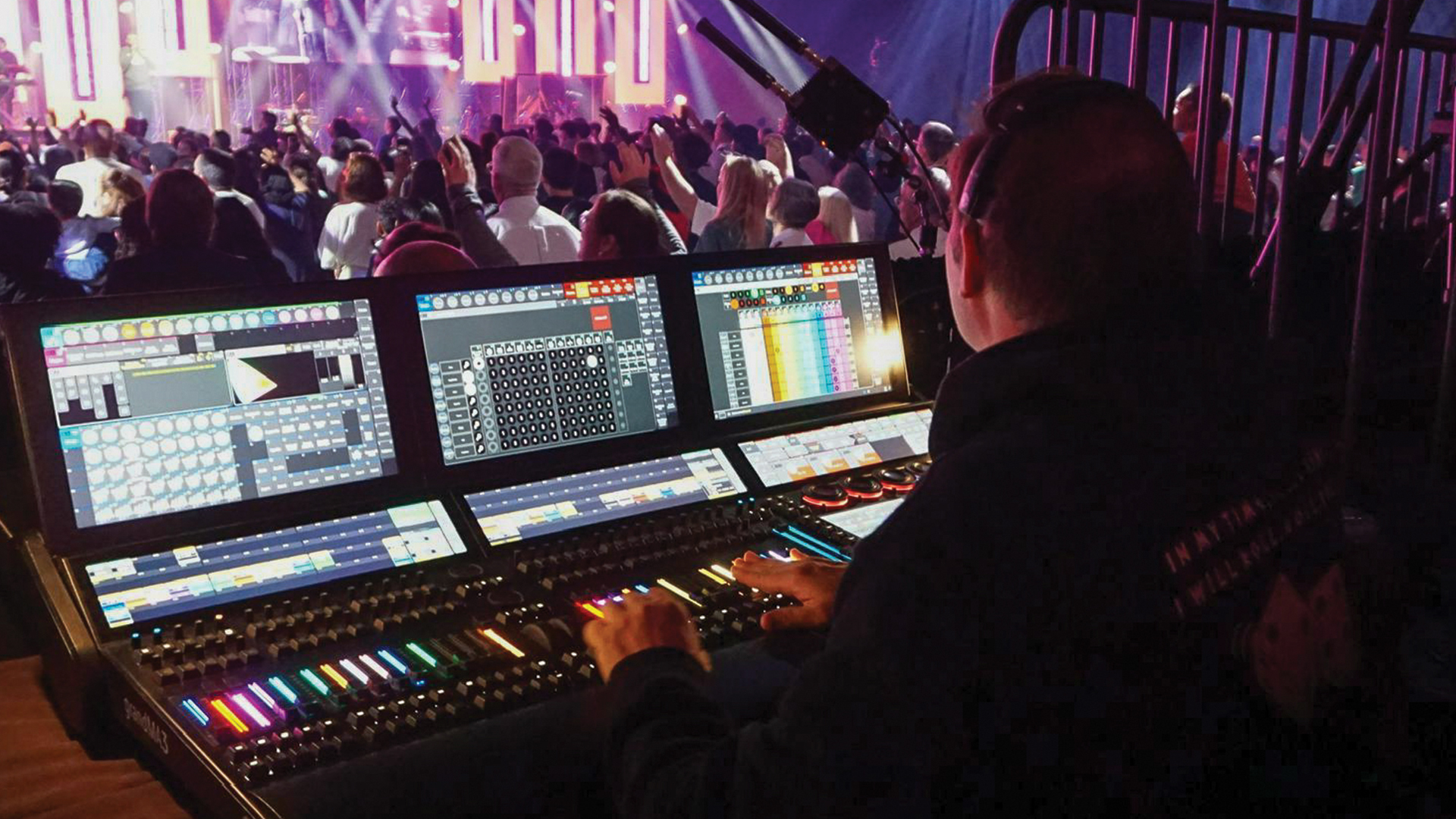
The relationship between a lighting designer and their console is intimate, complex, and occasionally combative. When your lighting control surface decides to express opinions about your programming choices, the results range from mildly irritating to spectacularly show-stopping. These are the stories of consoles that developed personalities and the operators who survived them.
The GrandMA2 That Held a Grudge
The MA Lighting GrandMA2 earned its reputation as the industry’s workhorse through reliability and flexibility. But seasoned operators know that even the most dependable console can develop quirks that defy explanation. Lighting programmer David Chen recalls a 2018 arena tour where his GrandMA2 full-size seemed to take personal offense at a particular cue sequence.
“We had this intricate pixel mapping sequence across 400 Robe Spiider fixtures. Every time we reached cue 47.3, the console would pause—not crash, not freeze—just pause for exactly 2.3 seconds before continuing. We rebuilt the cue from scratch four times. Same behavior. Different cue number, different sequence, worked perfectly. Something about that specific arrangement of data made the console contemplate its existence.”
The Solution That Shouldn’t Have Worked
After exhausting logical troubleshooting, Chen tried something unconventional. “I recorded the problematic cue to a different executor, then copied it back to the original location. Technically, the data was identical. But the console accepted it without protest. The MA-Net3 protocol engineers I consulted just shrugged. Sometimes digital systems develop what can only be described as preferences.”
When the Hog 4 Developed Timing Issues
The High End Systems Hog 4 represents a particular programming philosophy powerful but demanding respect for its workflow. Touring LD Maria Espinoza encountered what she calls “the Hog rebellion” during a 2020 theater run of a major musical.
“The console started interpreting timecode triggers with creative license. Our LTC feed from the QLab system was rock solid we verified it on three different analyzers. But the Hog would sometimes fire cues a beat early, as if it was anticipating the music. The show control integration wasn’t malfunctioning; it was improvising.”
The Firmware Update That Changed Everything
The issue resolved after a firmware update that technically addressed unrelated network protocols. “We never got a satisfying explanation,” Espinoza admits. “The release notes mentioned Art-Net timing improvements, but our issue was with hardwired timecode. Yet the behavior changed. Sometimes you just accept the victory and move on.”
Historical Context: The Evolution of Console Intelligence
The earliest lighting control systems were purely mechanical—rheostats and resistance dimmers that responded predictably to physical manipulation. The 1970s introduction of microprocessor-based consoles marked the beginning of an era where software mediated between operator intention and lighting output.
The Strand Light Palette of the 1980s introduced programmers to the concept of software bugs that could manifest as seemingly intentional behavior. The legendary ETC Expression series that followed established many conventions still used today—and introduced a generation of operators to the experience of consoles behaving in unexpected ways.
The ChamSys Conspiracy
The ChamSys MagicQ platform offers remarkable value for touring productions, but its British origins apparently extend to a certain dry sense of humor. Touring programmer James McAllister describes an incident during a corporate conference deployment that still puzzles him.
“We had a simple DMX universe layout—four universes feeding ETC Source Four LED Series 3 fixtures and some Chauvet Professional Maverick units. During the CEO’s keynote, the console decided that Universe 3 would operate at half intensity. Not a fader issue—we checked. Not a DMX termination problem—the signal was clean. The console simply decided that 50% was the appropriate maximum for that universe at that moment.”
The Mystery of the Master Inhibitor
Hours of post-show investigation revealed a master inhibitor setting that had been activated through a key combination that McAllister swears he never pressed. “The sequence to enable that function requires a specific series of button presses that I’d never used. Either I typed it accidentally while adjusting something else, or the console developed opinions about my lighting design. Given how the CEO’s face looked under those fixtures, I couldn’t entirely blame it.”
The GrandMA3 Learning Curve
The transition from GrandMA2 to GrandMA3 represented a fundamental shift in console architecture. Veteran operators accustomed to the older platform’s behavior found themselves negotiating with a new entity that processed information differently. The MA3 software introduced a phase-based engine that occasionally surprises operators expecting legacy behavior.
Lighting programmer Akiko Tanaka recalls her first major tour on the new platform. “The Phaser engine gave me incredible creative possibilities, but it also meant the console was making more decisions about how to execute my intentions. When I programmed a position fan effect across Martin MAC Encore fixtures, the console chose a path through the movement that I hadn’t anticipated. It was technically correct—but it wasn’t what I had visualized. The console was interpreting my intent, not just executing my commands.”
Practical Strategies for Console Communication
Veteran operators develop strategies for working with console quirks rather than fighting against them. The first principle is documentation—maintaining detailed notes about unexpected behaviors helps identify patterns that might otherwise seem random.
Second, embrace the showfile backup discipline. Save versions constantly, with descriptive names that capture the state of the programming. When a console develops unexpected behavior, being able to roll back to a known-good state provides both practical recovery and diagnostic capability.
Third, invest time in understanding the underlying architecture of your chosen platform. Reading the technical manuals beyond the operational basics reveals how the console processes data—knowledge that proves invaluable when troubleshooting unexpected behavior.
Network Considerations in Modern Systems
Contemporary lighting networks introduce additional complexity. When consoles communicate via sACN or Art-Net protocols, network issues can manifest as console misbehavior. A Luminex network switch with a flaky port might cause intermittent fixture responses that appear to be console-initiated.
Investing in proper network diagnostic tools separates console issues from infrastructure problems. Wireshark analysis of lighting protocol traffic can reveal whether unexpected behavior originates at the console or occurs in transmission.
The ETC Eos Wisdom
The ETC Eos family maintains a reputation for predictable, theatrical behavior—appropriate for a platform rooted in theater production. But even Eos has its moments. Programmer Rachel Kim describes what she calls “the helpful console syndrome.”
“Eos tries to anticipate what you want, which is usually wonderful. But sometimes its assumptions conflict with your intentions. The auto-mark function that moves fixtures during blackouts can surprise you if you haven’t thought through every transition. The console isn’t malfunctioning—it’s doing exactly what it’s designed to do. The operator just forgot to consider all the implications.”
The consoles speak to us constantly—through their responses, their behaviors, and occasionally their refusals. Learning to listen, to interpret, and to work with rather than against these digital partners defines the modern lighting programming craft. The operators who thrive are those who accept that the relationship requires negotiation on both sides.
