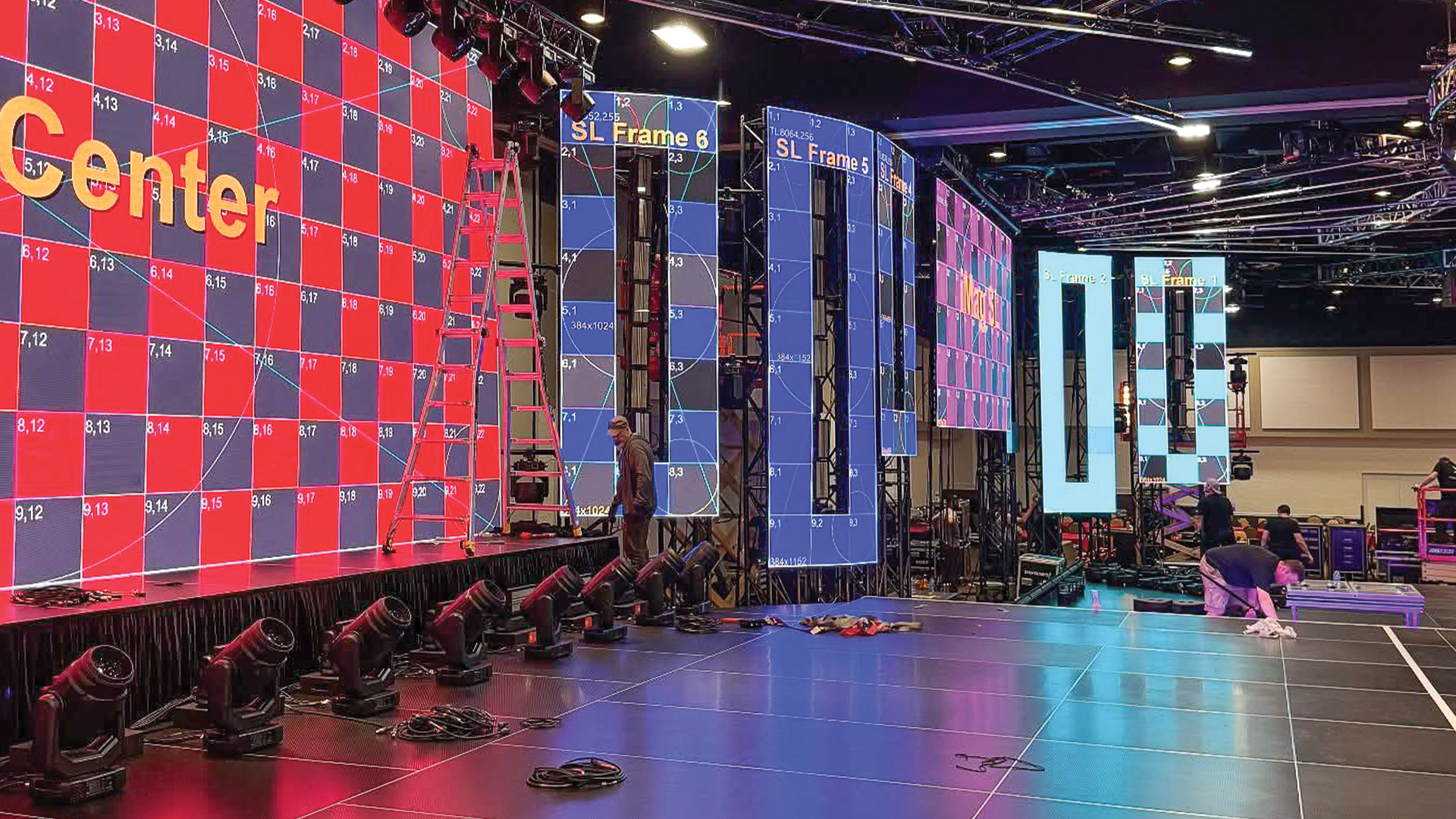
The stage design featured a dramatic curved back wall and angled side returns—an architectural statement that challenged the video team to make LED panels conform to non-rectangular surfaces. Understanding how LED panels adapt to unusual stage shapes enables production designers to specify creative geometries knowing that LED technology can realize their visions.
Curved Surface Solutions
Adjustable panel mounting enables standard panels to form curves. Products like ROE Visual Carbon Series include hardware that allows adjacent panels to angle relative to each other, creating segmented curves that approximate smooth surfaces. The angle limits between panels vary by product—typically 0-15 degrees per joint—determining minimum curve radius. Tighter curves require either more panels (with smaller individual angles) or products specifically designed for greater flexibility.
Flexible LED products conform to curves that rigid panels cannot address. PixelFLEX FlexLED, ROE Visual Strip, and similar products bend to custom geometries including compound curves, cylinders, and organic shapes. These products typically trade pixel density for flexibility—appropriate for applications where shape matters more than close-viewing resolution. Custom mounting structures support flexible products in their intended configurations.
Non-Rectangular Configurations
Angled walls and returns use standard panels in non-standard arrangements. A stage with 45-degree angled side walls simply positions panels at that angle relative to the back wall. The content mapping must account for these angles—images that appear correct on individual surfaces when viewed from intended positions. Media servers like disguise model these geometries precisely, enabling content that maintains visual continuity across angled surfaces.
Three-dimensional sculptural forms push LED into truly unusual applications. Cubes, spheres, pyramids, and custom shapes can be surfaced with LED using specialized mounting and flexible products. The MSG Sphere Las Vegas demonstrates extreme possibilities—a complete sphere surfaced with LED inside and out. While most productions won’t approach this scale, the techniques that enable such installations apply to smaller custom elements.
Content and Processing Considerations
Content mapping for unusual shapes requires understanding the physical geometry and programming processors accordingly. Brompton Technology and Novastar processors can map irregular pixel arrangements; the configuration process involves defining actual panel positions and orientations so processors route content correctly. This mapping work adds setup time compared to rectangular arrays but enables the non-standard configurations creative designs require.
Viewing angle effects become more prominent on complex geometries. LED panels exhibit brightness falloff when viewed off-axis; surfaces angled away from primary viewing positions appear dimmer than surfaces facing viewers directly. Designs should consider how angled surfaces will appear from actual audience positions, potentially adjusting brightness or accepting visible variation as part of the design aesthetic.
LED adaptability to unusual stage shapes enables creative freedom that previous display technologies couldn’t support. The combination of adjustable mounting, flexible products, and sophisticated content mapping realizes architectural visions that transform generic stages into memorable environments. Productions that leverage this adaptability create visual experiences that distinguish their events from competitors limited to conventional rectangular configurations.
