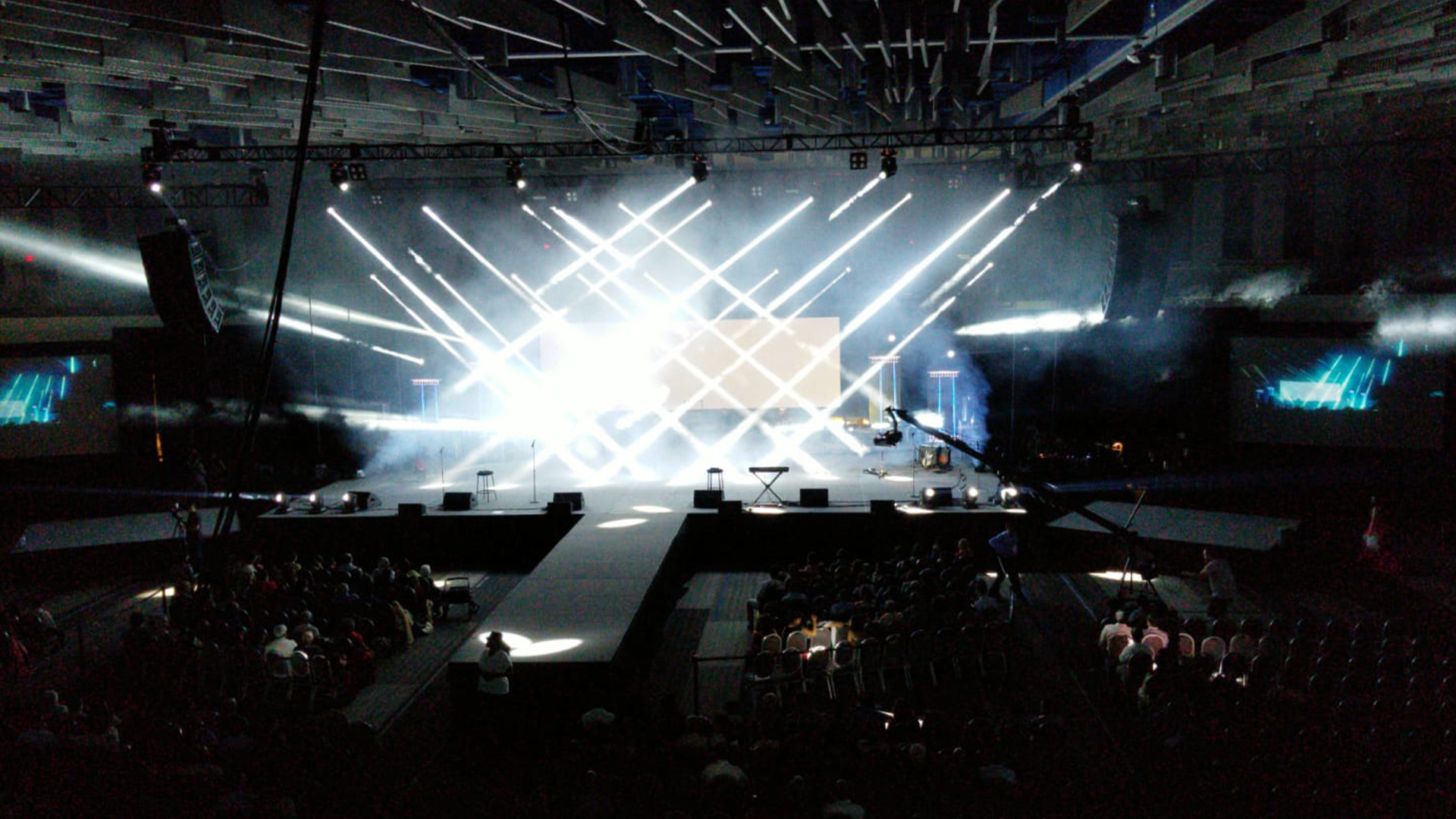
Every production operator who has worked more than a dozen live shows has a story about a keynote speaker who ad-libbed for twenty minutes, a comedian who dropped three bits and added two new ones, or an award show presenter who went entirely off the autocue and took the show’s meticulously scripted cue structure with them. Managing cue timing when talent goes off script is one of the highest-pressure real-time problem-solving disciplines in live event production.
Building Shows That Can Be Rebuilt in Real Time
The most resilient cue structures are designed from the ground up to accommodate the unexpected. This means building lighting cue stacks in MA Lighting grandMA3 or ETC Eos with labeled, non-sequential cue numbers that allow the operator to jump to any cue in the stack without disrupting the timing engine. It means organizing video playback in Disguise or Resolume so that content is organized by segment rather than by sequential timecode, allowing the operator to hold on a loop, skip a segment, or jump to a cue on verbal command from the director.
The Director’s Language: Clear Communication Under Pressure
When talent deviates from script, the production director becomes the real-time translator between the talent’s live behavior and the operators’ cue execution. Directorial language must be precise, pre-agreed, and rehearsed. The standard professional practice is to use “standby” and “go” language for all cue commands — never “ready” (too easily confused with “go”), never “now” (too similar to “no”), and never ad-libbed instructions that require operators to interpret intent rather than execute a specific command. Some of the most experienced live directors in the industry — including those working with IMG Media and Done + Dusted — conduct pre-show communication drills specifically to sharpen the director-to-operator vocabulary.
Timecode Shows: Friend and Enemy
Timecode-driven shows — where lighting, video, and pyrotechnic cues are locked to a master timecode clock — deliver pristine show execution when talent sticks to the script and catastrophic failure when they do not. The professional solution for shows with a high probability of talent deviation is a hybrid approach: timecode drives elements that must be precisely synchronized (pyrotechnics, pre-produced video segments, music playback), while all other cues remain in a manually triggered stack that the operator advances at the director’s command. SMPTE timecode systems from Betamax Timecode and TimeLord allow the timecode stream to be paused, jumped, and resumed from the director’s position without interrupting elements that are internally self-timed.
Visual Communication Systems for Large Crews
On large productions where intercom chatter between the director and multiple operators creates cognitive overload, visual cue systems provide a parallel channel for real-time direction. Cue light systems — physical red/amber/green lamp systems mounted at each operator position — allow the director to pre-warn operators of an incoming cue (amber), hold them on standby (steady red), and release them simultaneously (green flash or extinguish) without a single word on the intercom. The Green-GO digital intercom system includes integrated cue light management alongside its digital audio intercom, making it a popular choice for complex multi-operator productions.
The Art of the Graceful Cover
When talent goes genuinely off-script and there is no quick recovery path, the best operators execute what experienced production directors call the graceful cover — a smooth transition to a holding state that buys time without alerting the audience that anything is wrong. For lighting operators, this typically means transitioning to a flattering general wash that complements the stage look without the specificity of a scripted cue. For video operators, it means returning to an approved holding graphic or ambient loop. The ability to execute a graceful cover fluently — without panic, without audible intercom drama, and without breaking the audience’s experience — is one of the markers that separates a seasoned production professional from a competent technician.
