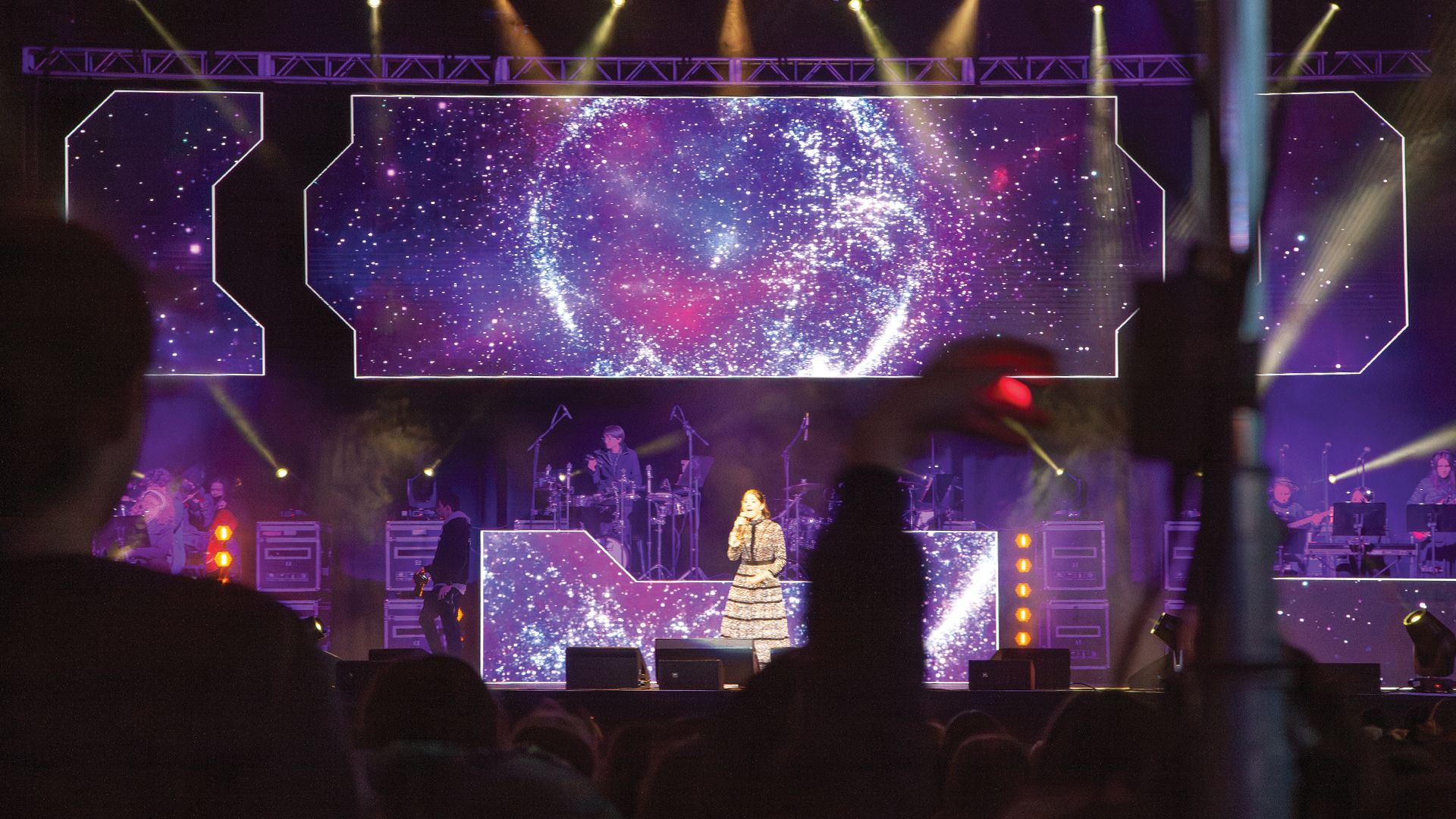
Understanding Projection Mapping with LED Screens
Projection mapping with LED screens transforms ordinary surfaces into dynamic, interactive visual experiences. Unlike static projections, this technique allows visuals to conform precisely to the contours, angles, and features of the LED surface. By combining high-resolution LED walls with projection technology, event designers can create immersive environments for concerts, corporate events, trade shows, and product launches.
Using projection mapping with LED screen enables content to move across surfaces, wrap around objects, or integrate with live performers, producing a level of immersion unattainable with traditional video screens.
Choosing the Right LED Panels
The success of projection mapping depends heavily on the LED screens themselves. Key considerations include:
-
Pixel Pitch: Finer pixel pitch ensures sharper visuals and more detailed content.
-
Brightness and Contrast: High-brightness panels prevent washout from stage lighting or ambient light.
-
Panel Size and Modularity: Modular panels allow flexibility in mapping content to unconventional stage shapes.
-
Refresh Rate: Smooth motion is essential for projection overlays, making higher refresh rates crucial.
Selecting the appropriate LED wall is the first step in effective projection mapping with LED screens.
Designing Content for Mapping
Content must be created or adapted specifically for projection mapping:
-
3D Modeling: Map visuals to the exact dimensions of the LED surface to ensure accuracy.
-
Layered Effects: Combine static graphics, animated sequences, and interactive elements.
-
Color Calibration: Match colors between the LED panels and projected content to maintain visual fidelity.
-
Dynamic Scaling: Adjust content resolution and aspect ratios for varying panel sizes.
Properly designed content ensures the projection seamlessly integrates with the LED display, enhancing audience engagement.
Synchronizing Projectors and LED Panels
Effective projection mapping with LED screens requires tight synchronization between projectors and LED content:
-
Media Servers: Use servers capable of managing multiple outputs and syncing playback.
-
Timecode Integration: Synchronize video, lighting, and audio to maintain alignment during live performances.
-
Edge Blending: Overlap projector edges to create continuous visuals without visible seams.
-
Warping and Masking: Adjust projections to fit the LED surface precisely, compensating for irregular shapes or angles.
Accurate synchronization is critical for immersive, visually coherent experiences.
Interactive Projection Techniques
Adding interactivity elevates projection mapping with LED screens:
-
Motion Tracking: Detect performer or audience movement to trigger visual effects.
-
Touch-Sensitive Panels: Incorporate LED touchscreens to allow audience interaction.
-
Real-Time Data Integration: Feed live data, social media content, or event metrics directly into the mapped visuals.
Interactive elements increase engagement and create memorable experiences that leave a lasting impression.
Integrating with Stage Design
Projection mapping should complement the stage setup, not compete with it:
-
Placement of Projectors: Ensure unobstructed paths from projector to LED surface.
-
Lighting Coordination: Balance stage lighting to prevent washout while maintaining visibility of performers.
-
Spatial Alignment: Use mapping software to align projections with LED edges and stage geometry.
A well-integrated design ensures the LED wall and projections create a cohesive visual narrative.
Troubleshooting Common Challenges
Working with projection mapping with LED screens comes with technical challenges:
-
Keystone Distortion: Correct with software warping to maintain proportional imagery.
-
Ambient Light Interference: Use high-lumen projectors or control venue lighting.
-
Signal Lag or Desynchronization: Implement precise timecode and check media server latency.
-
Content Misalignment: Calibrate regularly and use mapping templates for accuracy.
Proactive troubleshooting prevents technical failures and ensures consistent visual quality.
Scaling for Large Venues
Projection mapping is increasingly used in arenas, concert halls, and outdoor events. Scaling requires:
-
Multiple Projectors: Use overlapping zones to cover expansive LED surfaces.
-
Distributed Media Servers: Manage content across multiple outputs without latency.
-
High-Brightness LED Walls: Ensure visuals remain vivid even from a distance.
-
Structural Rigging: Safely mount projectors and LED panels to withstand dynamic conditions.
Large-scale projection mapping delivers immersive experiences that can captivate audiences even in massive venues.
Combining with Other AV Elements
Projection mapping can be enhanced by integrating with other audiovisual elements:
-
Surround Sound: Sync visual cues with immersive audio for multi-sensory engagement.
-
LED Floors or Catwalks: Extend mapped visuals across the performance space.
-
Augmented Reality: Combine AR effects with projection overlays for hybrid event experiences.
Combining projection mapping with LED screens and additional AV elements creates a fully immersive stage environment.
Safety and Technical Considerations
Safe and efficient deployment requires attention to:
-
Rigging Stability: Secure LED panels and projectors to prevent accidents.
-
Cable Management: Avoid trip hazards and ensure consistent power delivery.
-
Heat Management: Projectors and LED walls generate heat; ensure proper ventilation.
-
Backup Systems: Keep spare projectors, cables, and panels ready in case of failure.
Following safety protocols ensures uninterrupted operation of projection mapping with LED screens in any environment.
Measuring Audience Engagement
One of the benefits of projection mapping with LED screens is the ability to track and measure interaction:
-
Motion Sensors: Record how attendees respond to interactive visuals.
-
Content Analytics: Analyze which elements of the projection receive the most engagement.
-
Social Media Integration: Display live feeds and monitor online audience participation.
These insights help planners refine content for future events and maximize ROI.
Future Trends in Projection Mapping
The use of projection mapping with LED screens is expected to grow with advances in technology:
-
Higher Resolution LED Walls: Enable more detailed projections.
-
Real-Time 3D Mapping: Automatically adjust projections for changing stage setups.
-
AI Integration: Use AI to adapt visuals based on audience behavior or environmental conditions.
-
Wireless Projectors: Simplify installation and reduce cabling constraints.
Staying ahead of trends ensures events remain visually cutting-edge and engaging.
